KIRA B 200
59803260 (12/25)
59803260 (12/25)
 Read these original operating instructions and the enclosed safety instructions before using the device for the first time. Proceed accordingly.
Keep both books for future reference or for future owners.
These instructions are intended for the user groups of normal users and supervisors.
Each user can be granted or denied permissions for various device functions via the touch screen of the device.
All descriptions in this manual refer to the standard settings suggested in the device for the respective user group.
These operating instructions describe the hardware components of the device.
The focus here is on issues relating to the manual mode, care and service as well as troubleshooting.
The software functions are described in separate operating instructions.
These software instructions can be found in the help section of the user interface and online at
www.karcher.com
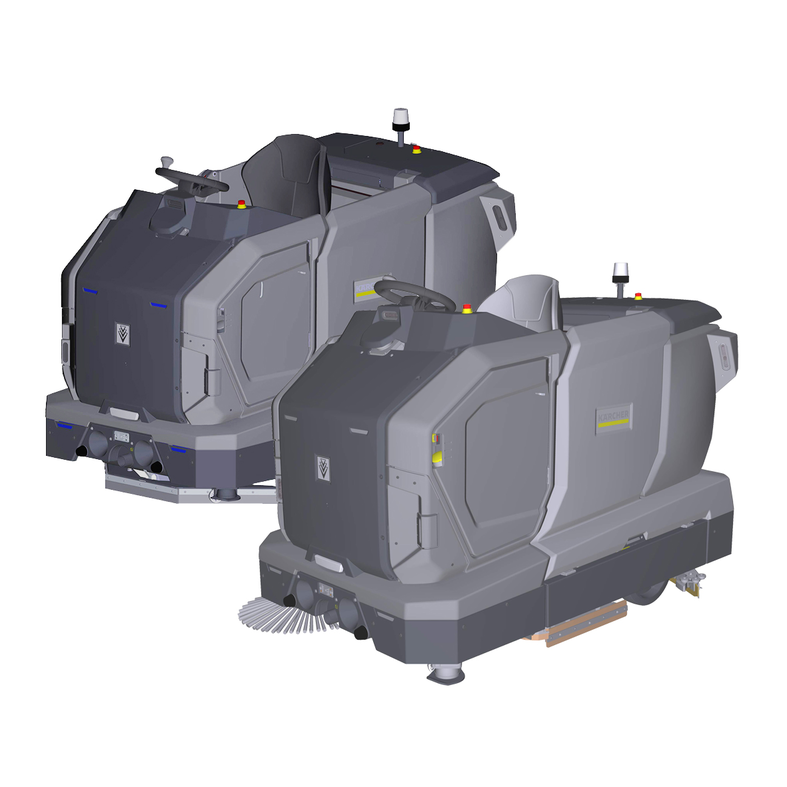
This scouring and vacuum machine is used for autonomous wet cleaning of level floors.
The device follows previously learnt cleaning tasks independently of operator intervention.
It is controlled by software that uses extensive sensor technology to perceive its environment and adapt its driving behaviour to the situation at hand.
This scouring and vacuum machine can also be used for manual cleaning.
This device is suitable for commercial and industrial use, For example, in factories, in warehouses and logistics areas or in large event rooms. Use the device only in accordance with the information in these operating instructions.
The device may only be used for cleaning smooth surfaces that are insensitive to water and polishing.
The device is designed for indoor use.
This device is only suitable for use in dry areas.
The operational temperature range is between +5 °C and +40 °C.
The device is not suitable for cleaning frozen floors (e.g. in cold stores).
The device is suitable for maximum water height of 1 cm. Do not drive into an area if there is a danger of exceeding the maximum water height.
When using chargers or batteries, only the components approved in the operating instructions may be used. A different combination must be confirmed by the responsible supplier of the charger and/or battery.
The device is not intended for cleaning public traffic routes.
The device must not be used on pressure-sensitive floors. Take into account the permissible load per unit area of the floor. The load per unit area caused by the device is specified in the technical data.
The device is not suitable for use in potentially explosive environments.
The device is approved for operation on surfaces with a maximum incline (see "Technical Data").
Before using the device for the first time, read and observe these operating instructions and the complete operating instructions (in the device display).
Operate the device only when the lid, all flaps, doors, and the safety door are closed.
Press the emergency stop button for immediate shutting down in an emergency.
Only operate the device on surfaces that do not exceed the maximum permitted slope (see the "Technical data").
Do not place any part of your body between the docking station and the device during the docking process.
Indication of an imminent threat of danger that will lead to severe injuries or even death.
Indication of a potentially dangerous situation that may lead to severe injuries or even death.
Indication of a potentially dangerous situation that may lead to minor injuries.
Indication of a potentially dangerous situation that may lead to damage to property.
Risk of asphyxiation. Keep packaging film out of the reach of children.
Only use the device for its proper use. Take into account the local conditions and beware of third parties, in particular children, when working with the device.
The device is not intended for use by persons with restricted physical, sensory or mental abilities or those lacking in experience and / or lacking in knowledge.
Only people who have been instructed on how to use the device, or have proven their ability to operate it, and have been explicitly instructed to use it, must use the device.
Children must not operate the device.
Children must be supervised to prevent them from playing with the appliance.
Keep children and unauthorised persons away from the device.
Safety devices are provided for your own protection. Never modify or bypass safety devices.
Risk of injury from petrol cap and safety door!
Risk of injury to limbs and head due to unexpected closing of petrol cap and safety door.
When opening and closing petrol caps and safety doors, keep your limbs and head out of the danger zone.Keep the detergent out of the reach of children.
Never use the recommended detergents undiluted. These products are operationally safe since they do not contain any acids, alkali or substances that are harmful to the environment. Should detergents come into contact with eyes, rinse these out immediately and thoroughly using water and seek medical attention immediately. The same applies if detergents are swallowed.
Only use the detergents recommended by the manufacturer and observe the application, disposal and warning instructions of the detergent manufacturers.
Only use accessories and spare parts which are approved by the manufacturer. Only original accessories and original spare parts ensure that the appliance will run fault-free and safely.
Risk of damage
Damage to the suction bar due to too steep an angle when travelling on ramps.
The suction bar must be removed when travelling on ramps with a gradient of more than 15%.Shut the motor down prior to transportation. Secure the device, taking into account its weight. See chapter Technical data in the operating instructions.
The device is equipped with a safety door and emergency stop buttons.
An operator must NOT stand on the device when in autonomous mode! Automatic docking in manual mode is an exception.
Risk of injury from moving device
In manual mode, there is a risk of the operator being injured by moving parts of the device or by surrounding objects.
Do not hold any parts of your body out of the device while it is moving.The device may only be operated when the lid, the equipment door and all flaps are closed. The safety door must be closed when in autonomous mode.
If the emergency stop button is pressed, all device functions are stopped immediately.
Risk of injury from electric current
The emergency stop button does not switch off the device or disconnect the electrical connections.
If the safety door is opened when in autonomous mode, the device stops.
When in autonomous mode, pressing the pause function (pause button on the back of the device or in the display) triggers an operating pause of 10 seconds.
This docking station is suitable for commercial and industrial use, For example, in factories, in warehouses and logistics areas or in large event rooms.
Users must be adequately instructed in the use of the docking station.
Use the docking station in dry areas only.
Unplug the docking station mains plug from the mains socket before carrying out any maintenance work.
Prevent the mains cable of the docking station from coming into contact with the rotating brushes of the floor cleaner.
Use the docking station indoors only
Store the docking station indoors only.
Observe the following warnings when handling the batteries:
 | Observe notes in the instructions for the battery, on the battery and in these operating instructions. |
 | Wear eye protection. |
 | Keep acids and batteries away from children. |
 | Risk of explosion |
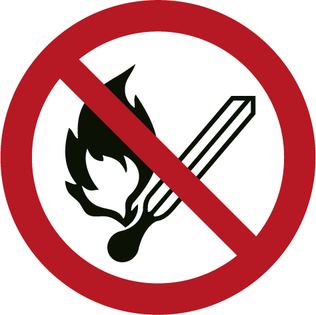 | Fire, sparks, open flames and smoking are prohibited. |
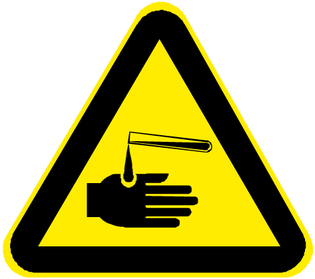 | Risk of acid burns |
 | First aid. |
 | Warning |
 | Disposal |
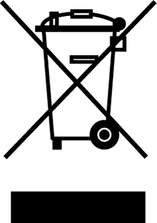 | Do not throw batteries in the bin. |
Only use original accessories and original spare parts. They ensure that the appliance will run fault-free and safely.
Information on accessories and spare parts can be found at www.kaercher.com.
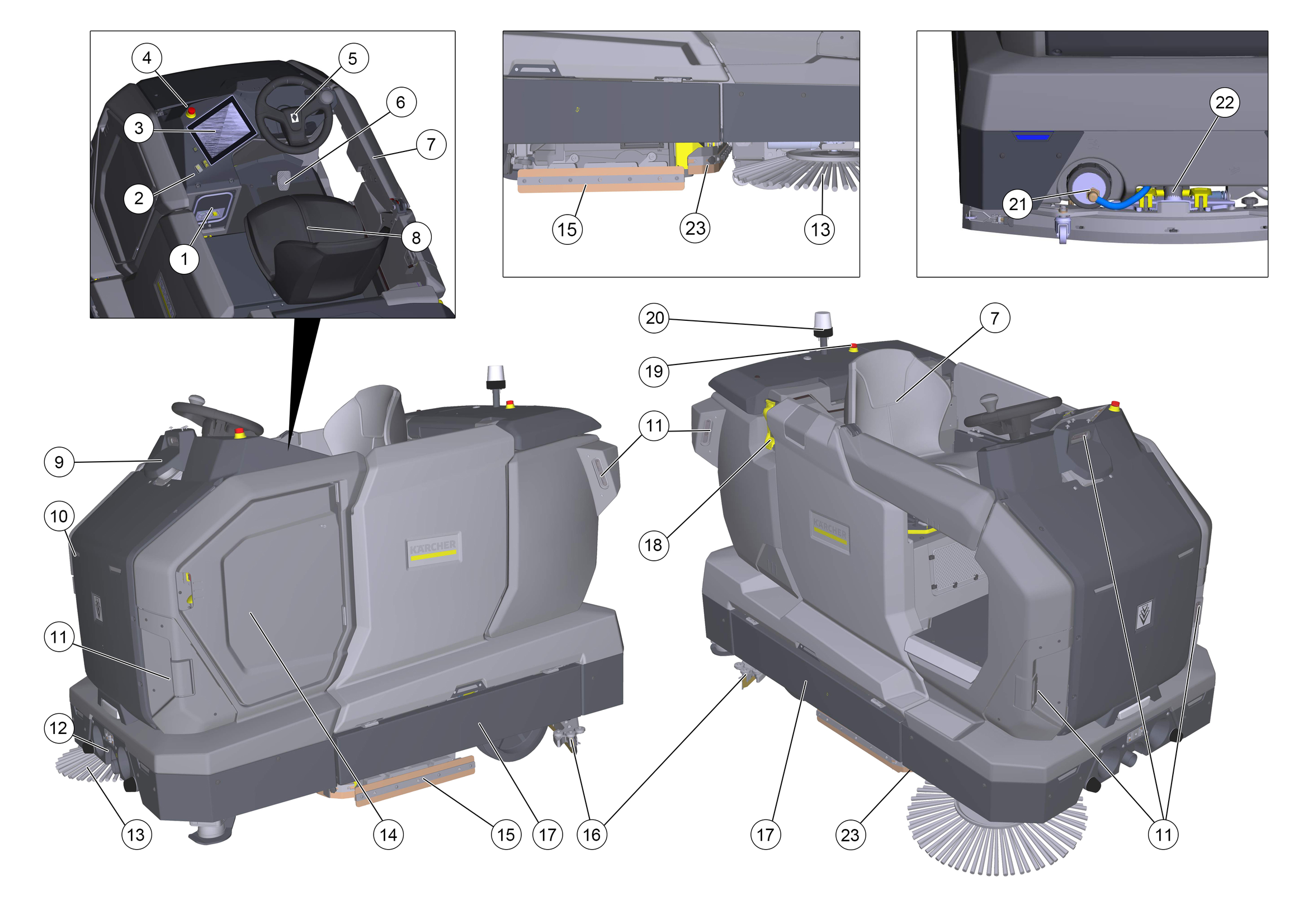
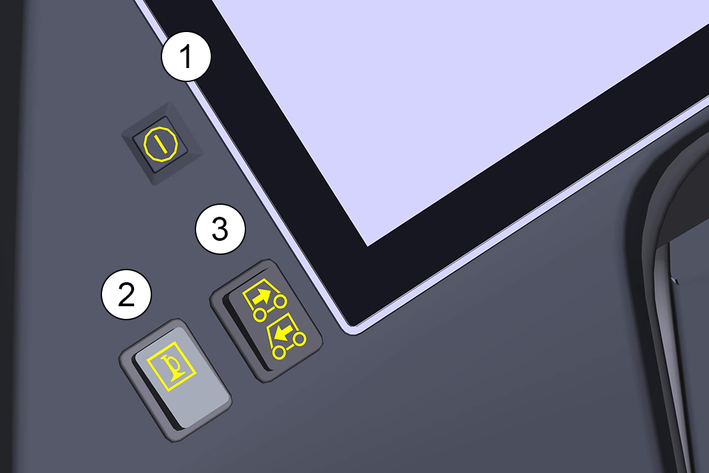
Switch group
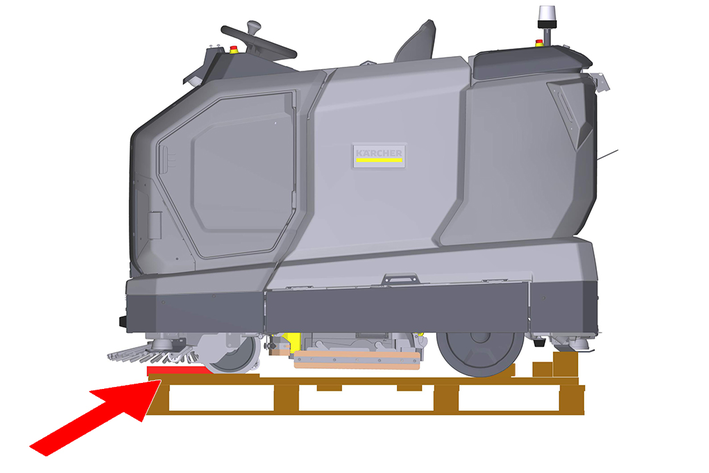
Remove the protective hood.
Remove the straps.
Unscrew the wooden block on the front wheel from the wooden base.
Remove the eyelets on one side (2 pieces).
Unscrew and remove the rear 2 beams from the wooden base.
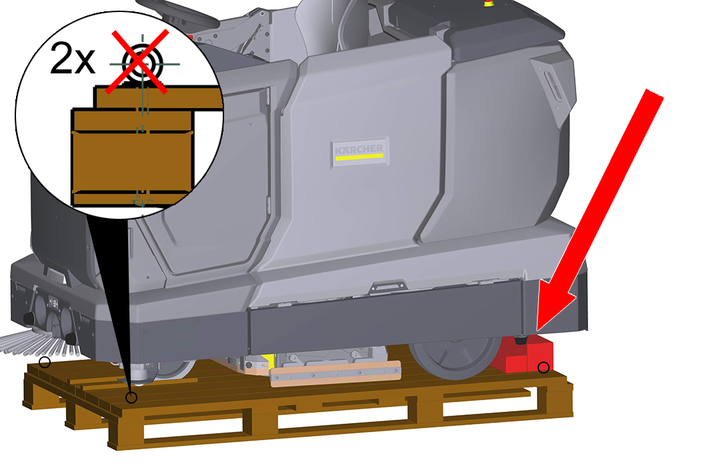
Unscrew the 3 boards from the wooden base.
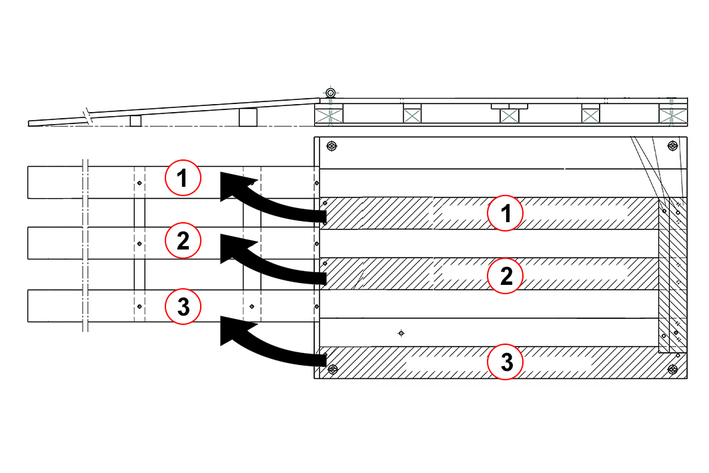
Use the boards and the beams to lay a ramp behind the wooden base.
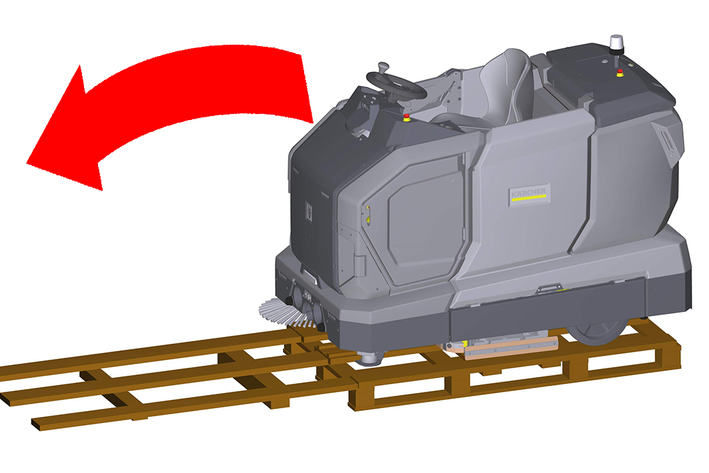
Fix the boards and the beams with the previously removed screws.
Damage to the front wheel sensors
When the machine is switched on, the front wheel performs referencing. Transport locks can interfere with this referencing and cause damage to the sensor system.
Make sure that all transport locks on the front wheel are removed and that the wheel can swivel freely.Connect the mains plug.
The machine wakes up.
Pull out the mains plug.
Carefully drive the device down the ramp from the wooden base.
The battery is automatically charged when operating with a docking station.
Without docking station:
Open the side device door.
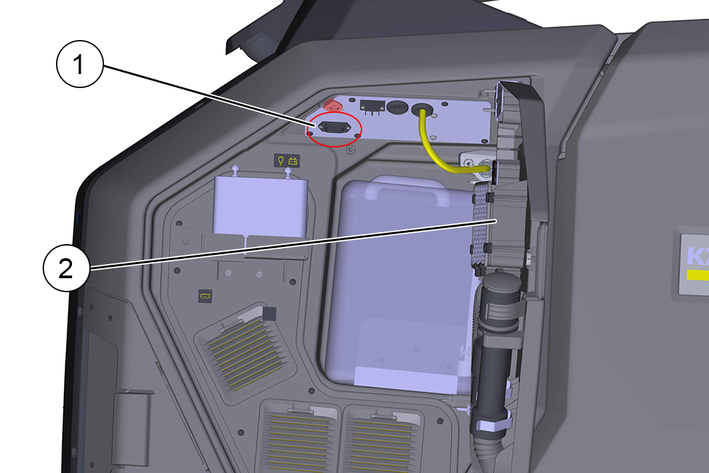
Remove the charging cable from the compartment.
Disconnect the plugged-in internal cable from the mains socket.
Plug the charging cable into the mains socket.
Plug the mains plug of the charging cable into a mains socket.
The charging process begins automatically.
The charging state is displayed on the touch screen.
The device cannot be used during the charging process.
When the battery is fully discharged, charging takes about 5 hours.
Unplug the mains plug from the socket after the charging process has finished.
Plug the internal cable back in.
Stow the mains cable in the device compartment or unplug the power cable.
The fresh water tank is automatically charged when operating with a docking station.
Without a docking station, the fresh water tank can be filled in two ways:
Connect the water hose to the connection nozzle of the filling system (maximum water temperature 50 °C).
Open the water inlet.
Monitor the device, the automatic filling system interrupts the water supply when the fresh water tank is full.
Close the water inlet.
Remove the water hose.
Insert the water supply hose into the filling hole next to the filling system. Observe the maximum water temperature of 50 °C!
Open the water inlet.
Observe the filling level and turn off the water supply when the tank is full.
Detergent is added to the fresh water on the way to the cleaning head by a dosing device.
Open the side device door.
Remove the lid from the cleaning can.
Insert the suction lance of the dosing device into the opening of the can.
Place the can with the detergent into the holder.
Close the side device door.
The suction bar must be installed before initial startup.
The suction bar can be changed by the operator. Carry out the following steps for assembly/disassembly:
Removing the suction bar
Move the suction bar to the removal position using the service functions on the display.
Open the lock handles of the quick-release fasteners.
Remove the suction bar from the device (it is best to pull on the handles on one side).
Attach the suction bar
Use the service functions on the display to move the suction bar to the installation position (for easier installation, lower it slightly lower than when removing the suction bar).
Open the lock handles of the quick-release fasteners
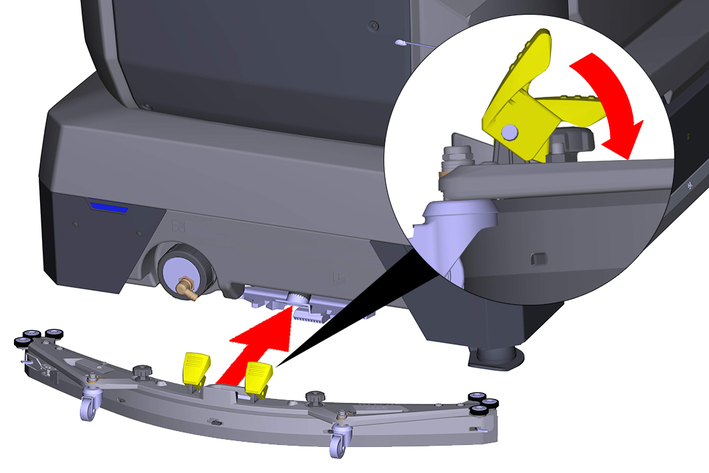
Push the suction bar completely in the suction bar mount.
Close the lock handles of the quick-release fasteners.
Raise the suction bar again using the service function.
The height of the suction bar is already preset at the factory. The height may need to be readjusted. Follow the instructions below.
The height adjustment affects the bending of the suction lips on contact with the floor.
Standard setting: 3 washers above, 3 washers below the suction bar.
Uneven ground: 5 washers above, 1 washer below the suction bar.
Very smooth ground: 1 washer above, 5 washers below the suction bar.
Unscrew the nuts.
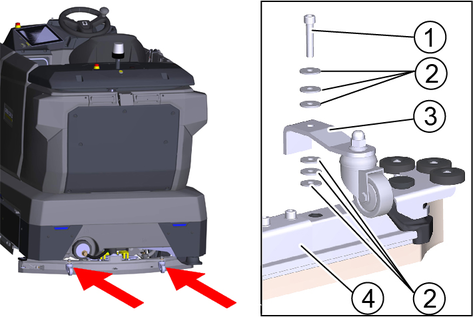
Place the desired number of washers between the suction bar and the spacer roller.
Fit the remaining washers above the spacer roller.
Screw on the nut and tighten.
Repeat the entire procedure at the other spacer roller.
Set both spacer rollers to the same height.
Danger of accident
A damaged or defective device can lead to accidents during operation.
Check the device before use and report any damage or malfunctions to the person responsible.Do not use the device if it is damaged or malfunctions.Check the device for leaks.
Check the function of the emergency stop button.
Check the function of the safety door.
Danger of accident due to defective safety button on the safety door
Take the device out of operation immediately if the safety button on the safety door does not function reliably.Check the accelerator pedal (does the device stop reliably when the accelerator pedal is released?)
Check the sensors for soiling, clean if necessary.
Restart the device.
Check the function of the sensors (does the device detect obstacles?).
Press the start button.
The device starts up.
Wait until the log-in screen is displayed on the touch screen.
The executable functions are displayed in the main menu.
Please refer to the separate software instructions for further operation and application instructions. You can find these on the details page of the device and in the software.
The operating instructions enclosed with the device only cover the activities for startup and a troubleshooting guide in case of a defective touch screen.
The full operating instructions and explanatory video clips can be accessed and viewed on the touchscreen after the Initial startup of the device.
Follow the instructions in the software manual for the device.
All settings and cleaning parameters are described in the separate software instructions. Please observe these instructions when using the device.
Press the Settings button in the main menu.
The Settings menu is displayed. Important basic functions:
Creating and managing users
Setting the time and the date
Configuring the network connection
System information (operating hours, software version, material number, serial number, updates)
For the reliable and safe execution of autonomous operation, the following rules must be observed.
Limit the cleaning area with barriers at the following points:
Steps
Stairs
Escalators, moving walkways
Lifting platforms
Do not place ladders, scaffolding or other temporary obstacles in the cleaning area.
Do not leave electric cables or other low obstacles (up to 15 cm high) in the cleaning area.
Routes for autonomous operation must not pass through lifts or automatically opening doors. Use lifts and automatic doors only in manual operation.
Keep a sufficient distance away from water basins and glass surfaces.
Avoid direct, strong light incidence (e.g. low sun) on the sensors.
Avoid crossing strong light/shadow boundaries.
In autonomous routes, do not approach roller doors head-on but parallel to the door.
Mark the cleaning area with warning signs and provide notice of wet floors.
In autonomous mode, do not climb on the device.
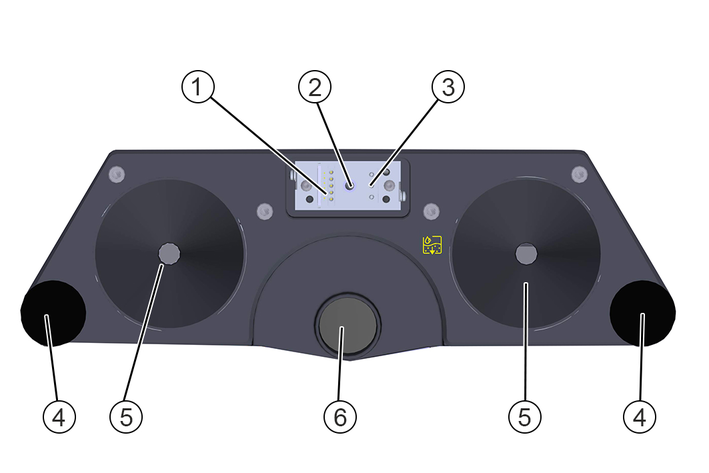
The device is supplied with an optional docking station. When choosing a location for the docking station, the following points should be taken into account:
Accessibility:
There should be sufficient space around the docking station (at least 4 m wide and 5 m in the direction of travel) so that the device can approach the docking station safely.
Access to electricity and water:
The location of the docking station should already have access to a power socket and fresh water as well as facilities for waste water disposal.
The drain opening must be close to the ground and have a gradient of 1° -3°. Otherwise, a lifting system is required for the waste water.
Not open to the public:
The docking station should be placed in a location that is not accessible to the public, as the KIRA B 200 must deactivate some of its safety functions in order to perform the docking manoeuvre.
The docking station is programmed in the device software. Please refer to the separate software instructions.
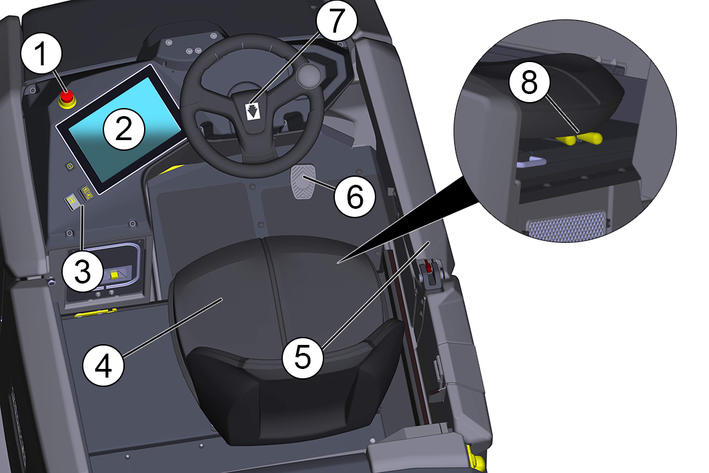
The device has a driver's workstation.
Open the safety door.
The safety door can remain open while driving.
Sit in the driver's seat (seat contact switch).
Adjust the driver's seat so that all control elements are within easy reach.
Select the direction of travel with the selector switch for the direction of travel.
Carefully press the accelerator pedal.
Release the accelerator pedal to brake.
The horn button is located next to the direction of travel switch.
After driving, park the device in a safe place and protect it from unauthorised access.
In manual mode, the device is driven by the operator over the surface to be cleaned.
Select the "Manual cleaning" menu item in the software and follow the instructions.
The parameters for fresh water and detergent added, as well as brush speed, contact pressure and suction are set in a submenu.
Open the safety door and take a seat on the driver's seat.
Drive the device to the operating location.
Select the desired settings for water quantity, detergent dosage, brush power and suction power.
Activate the required functions (suction, cleaning head).
Drive the device over the surface to be cleaned.
In manual mode, the device can be emptied via a docking station.
Select the "Docking" menu item in the software and follow the instructions.
Drive the device close to the docking station.
Start docking.
Risk of damage due to incorrectly approaching the docking station!
Manually starting up the docking station can damage the dock and / or the docking station.
The docking process may only be carried out automatically by the device's autonomous systems.In manual mode, the device can be emptied at a disposal point.
Drive the device to a suitable disposal point (floor drain, in accordance with the applicable regulations).
If necessary, connect the drain hose (located in the side device door) to the drain opening of the dock.
Start manual emptying using the service function on the display.
If necessary, the fresh water tank can be emptied manually.
Drive the device to a suitable disposal point (floor drain, in accordance with the applicable regulations).
Unscrew the cap of the fresh water tank (located at the back of the device).
Exercise caution when opening the fresh water tank. Depending on the filling level of the tank, contamination may occur due to water splashing out.
After emptying the tanks, tighten the cap again.
Inadvertently starting up device
Risk of injury, electric shock
Switch the device off before working on it.Unplug the mains plug or disconnect the device from the docking station .Drain and dispose of the waste water and fresh water.
Contact Customer Service in the case of malfunctions that cannot be corrected using this table.
The device is switched on, the device display remains dark or shows errors
Remedy:
Restart the device.
Contact KÄRCHER Service.
The device cannot be started
Remedy:
Check the emergency stop button on the top of the device.
Check the battery charge level and charge the device if necessary.
If necessary, the device can be moved manually. This can occur, for example, if the battery is completely discharged and the device can no longer start up the docking station. If the device cannot be charged via a socket, it must be pushed manually. To do this, the brake of the device must be released and the emergency steering activated.
Open the left protective cover (door) of the suction head.
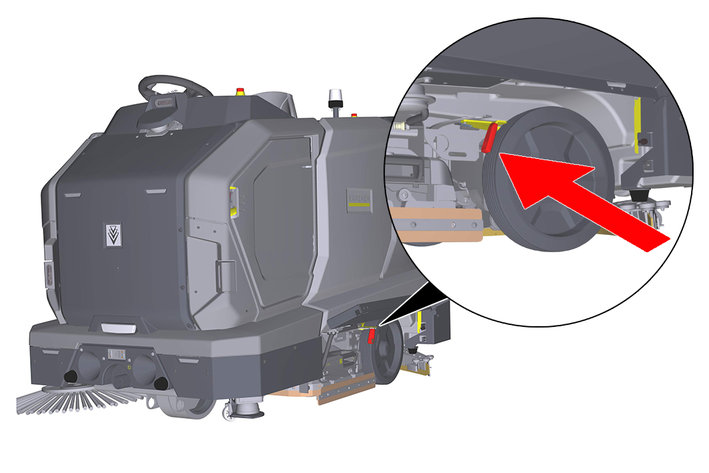
Pull the brake lever forwards
The brake is now released and the device can be pushed manually.
Risk of injury due to unexpected movement of the device.
If the brake is released, the device can move in an uncontrolled manner and cause serious injury and damage to property.
Only release the brake on level surfaces and pay attention to the weight of the device when pushing it. Do not push the device alone and pay attention to people and objects in the vicinity.After releasing the brake, the emergency steering must be activated to steer the device. The emergency steering functions by means of a separate battery even when the battery pack is completely discharged. The battery is located in the side compartment of the device and must always be present and charged.
Open the service bay.
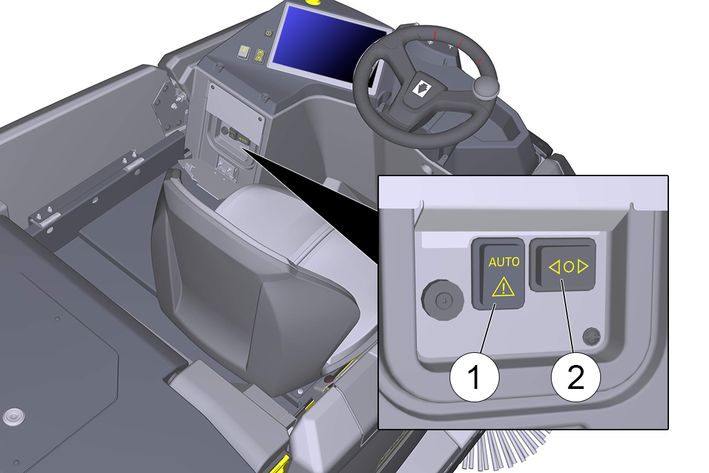
Activate the emergency steering function with the button.
Use the LEFT/RIGHT button to steer the front wheel.
To steer, do not stop pushing.
After reaching the destination, return the brake lever to its original position (brake applied) and deactivate the emergency steering.
The warranty conditions issued by our relevant sales company apply in all countries. We shall remedy possible malfunctions on your appliance within the warranty period free of cost, provided that a material or manufacturing flaw is the cause. In a warranty case, please contact your dealer (with the purchase receipt) or the next authorised customer service site.
Further information can be found at: www.kaercher.com/dealersearch
Further warranty information (if available) can be found in the service area of your local Kärcher website under "Downloads".
We hereby declare that the product named below complies with the relevant provisions of the directives and regulations listed. This declaration is invalidated by any changes made to the product that are not approved by us. The manufacturer shall bear sole responsibility for issuing of this declaration of conformity.
Product: Autonomous floor cleaner
Type: 1.533-xxx
Directives and Regulations2006/42/EC (+2009/127/EC)
2014/53/EU
2011/65/EU
Harmonised standards usedEN 60335-1
EN 60335-2-29
EN 60335-2-72
EN IEC 63000: 2018
EN 62233: 2008
EN 55012: 2007 + A1: 2009
EN 61000-6-2: 2005
EN 61000-6-3: 2007 + A1:2011
EN 61000-3-2: 2014
EN 61000-3-3: 2013
EN 300 328 V2.2.2
EN 301 893 V2.1.1
EN 301 908-1 V15.2.1
EN 301 908-2 V13.1.1
EN 301 908-13 V13.2.1
EN 300 440 V2.1.1
EN 301 489-52 V1.2.1
EN 62311: 2008
EN 62368-1: 2014
EN 301 489-1 V2.2.3
EN 301 489-3 V2.1.1
EN 301 489-17 V3.2.4
EN 301 489-19 V2.1.1
EN 303 687 V1.1.1
EN 18031-1:2024
EN 18031-2:2024
Additional implemented standardEN IEC 63327:2021
EN IEC 60335-1:2023+A11:2023
IEC 60335-2-72:2021
Name and addressDocumentation supervisor:
S. Reiser
Alfred Kärcher SE & Co. KG
Alfred-Kärcher-Str. 28 - 40
71364 Winnenden (Germany)
Tel.: +49 7195 14-0
Fax: +49 7195 14-2212

Winnenden, 2025/07/01
The undersigned act on behalf of and with the authority of the Board of Directors.
Alfred Kärcher SE & Co. KG
Alfred-Kärcher-Str. 28 - 40
71364 Winnenden (Germany)
Ph.: +49 7195 14-0
Fax: +49 7195 14-2212
UK Declaration of Conformity
We hereby declare that the product named below complies with the relevant provisions of the directives and regulations listed. This declaration is invalidated by any changes made to the product that are not approved by us. The manufacturer shall bear sole responsibility for issuing of this declaration of conformity.
Product: Autonomous floor cleaner
Type: 1.533-xxx
Directives and RegulationsS.I. 2008/1597 (as amended)
S.I. 2017/1206 (as amended)
S.I. 2012/3032 (as amended)
Designated standards usedEN 60335-1
EN 60335-2-29
EN 60335-2-72
EN IEC 63000: 2018
EN 62233: 2008
EN 55012: 2007 + A1: 2009
EN 61000-6-2: 2005
EN 61000-6-3: 2007 + A1:2011
EN 61000-3-2: 2014
EN 61000-3-3: 2013
EN 300 328 V2.2.2
EN 301 893 V2.1.1
EN 301 908-1 V15.2.1
EN 301 908-2 V13.1.1
EN 301 908-13 V13.2.1
EN 300 440 V2.1.1
EN 301 489-52 V1.2.1
EN 62311: 2008
EN 62368-1: 2014
EN 301 489-1 V2.2.3
EN 301 489-3 V2.1.1
EN 301 489-17 V3.2.4
EN 301 489-19 V2.1.1
EN 303 687 V1.1.1
-
-
Additional implemented standardEN IEC 63327:2021
EN IEC 60335-1:2023+A11:2023
IEC 60335-2-72:2021
Name and addressDocumentation supervisor:
S. Reiser
Alfred Kärcher SE & Co. KG
Alfred-Kärcher-Str. 28 - 40
71364 Winnenden (Germany)
Tel.: +49 7195 14-0
Fax: +49 7195 14-2212
Winnenden, 2025/07/01
The undersigned act on behalf of and with the authority of the Board of Directors.
Alfred Kärcher SE & Co. KG
Alfred-Kärcher-Str. 28 - 40
71364 Winnenden (Germany)
Ph.: +49 7195 14-0
Fax: +49 7195 14-2212
General | |
Autonomous travel speed (max.) | 5,4 km/h |
Manual travel speed manual (max.) | 6,0 km/h |
Autonomous theoretical surface coverage | 4590 m2/h |
Manual theoretical surface coverage | 5110 m2/h |
Surface coverage per tank filling | 7143 m2/h |
Fresh/waste water tank volume | 200 l |
Coarse dirt container volume | 9 l |
Detergent tank volume (Option Dose) | 10 l |
Detergent dosing | 0...3 % |
Water dosing | 0...6 l/min |
Dimensions | |
Length | 1944 mm |
Width without suction bar | 1138 mm |
Width suction bar | 1120 mm |
Amount | 1471 mm |
Working Width | 850 mm |
Autonomous passage width (min.) | 1350 mm |
Autonomous edge clearance (min.) | 150 mm |
Packaging dimensions lxwxh | 2100x1360x1800 mm |
Tyres | |
Front wheel, width | 125 mm |
Front wheel, diameter | 250 mm |
Rear wheel, width | 70 mm |
Rear wheel, diameter | 350 mm |
Weight | |
Approved total weight | 830 kg |
Net weight (transport weight) | 630 kg |
Brush pressure, max. | 667,08 (68) N (kg) |
Brush contact pressure, max. | 2,1 (215) N / m2 (g / cm2) |
Surface pressure | |
Steering roller | max 0,6 N/mm2 |
Rear wheel | max 0,8 N/mm2 |
Device performance data | |
Number of batteries | 4 |
Nominal voltage, Li-Ion | 25,6 V |
Battery capacity, Li-Ion | 320 Ah (5 h) |
Driving motor power | 2x 650 W |
Suction Turbine Power | 552 W |
Brush Drive Power | 1500 W |
Running time with full battery | 4 h |
Protection type | IPX3 |
Suction | |
Suction Power, Airflow | 19...24 l/s |
Negative Pressure (max.) | 11,9...14,7 (119...147) kPa (mbar) |
Cleaning Brushes | |
Brush length | 800 mm |
Brush rotation speed | 380/670/950 1/min |
Internal charger | |
Rated voltage | 100...240 V |
Current consumption | 10-9,4 A |
Power input | 1-2,25 kW |
Frequency | 50-60 Hz |
Power | 2740 W |
Battery charging time | 11,9...4,7 h |
Environmental conditions | |
Permissible temperature range | 5...40 °C |
Water temperature max. | 50 °C |
Filling system water pressure | 1 (10) MPa (bar) |
Waste water tank flushing system water pressure | 1 (10) MPa (bar) |
Relative humidity | 20...90 % |
Incline | |
Max. working area slope | 6 auto / 15 manu % |
Incline short distance (max. 10 m) Transport, loading | 25 % |
Determined values according to EN 60335-2-72 | |
Hand-arm vibration value | 0,5 m/s2 |
Uncertainty K | 0,2 dB(A) |
Sound level LpA | 64,5 dB(A) |
Uncertainty KpA | 2 dB(A) |
Sound power level LWA + Uncertainty KWA | 79,2 dB(A) |
General | |
Autonomous travel speed (max.) | 5,4 km/h |
Manual travel speed manual (max.) | 6,0 km/h |
Autonomous theoretical surface coverage | 4890 m2/h |
Manual theoretical surface coverage | 5410 m2/h |
Surface coverage per tank filling | 7143 m2/h |
Fresh/waste water tank volume | 200 l |
Coarse dirt container volume | - l |
Detergent tank volume (Option Dose) | 10 l |
Detergent dosing | 0...3 % |
Water dosing | 0...6 l/min |
Dimensions | |
Length | 1944 mm |
Width without suction bar | 1138 mm |
Width suction bar | 1120 mm |
Amount | 1471 mm |
Working Width | 900 mm |
Autonomous passage width (min.) | 1350 mm |
Autonomous edge clearance (min.) | 150 mm |
Packaging dimensions lxwxh | 2100x1360x1800 mm |
Tyres | |
Front wheel, width | 125 mm |
Front wheel, diameter | 250 mm |
Rear wheel, width | 70 mm |
Rear wheel, diameter | 350 mm |
Weight | |
Approved total weight | 828 kg |
Net weight (transport weight) | 628 kg |
Brush pressure, max. | 774,99 (79) N (kg) |
Brush contact pressure, max. | 0,2 (29) N / m2 (g / cm2) |
Surface pressure | |
Steering roller | max 0,6 N/mm2 |
Rear wheel | max 0,8 N/mm2 |
Device performance data | |
Number of batteries | 4 |
Nominal voltage, Li-Ion | 25,6 V |
Battery capacity, Li-Ion | 320 Ah (5 h) |
Driving motor power | 2x 650 W |
Suction Turbine Power | 552 W |
Brush Drive Power | 1200 W |
Running time with full battery | 4 h |
Protection type | IPX3 |
Suction | |
Suction Power, Airflow | 19...24 l/s |
Negative Pressure (max.) | 11,9...14,7 (119...147) kPa (mbar) |
Cleaning Brushes | |
Brush length | - mm |
Brush rotation speed | 177 1/min |
Internal charger | |
Rated voltage | 100...240 V |
Current consumption | 10-9,4 A |
Power input | 1-2,25 kW |
Frequency | 50-60 Hz |
Power | 2460 W |
Battery charging time | 11,9...4,7 h |
Environmental conditions | |
Permissible temperature range | 5...40 °C |
Water temperature max. | 50 °C |
Filling system water pressure | 1 (10) MPa (bar) |
Waste water tank flushing system water pressure | 1 (10) MPa (bar) |
Relative humidity | 20...90 % |
Incline | |
Max. working area slope | 6 auto / 15 manu % |
Incline short distance (max. 10 m) Transport, loading | 25 % |
Determined values according to EN 60335-2-72 | |
Hand-arm vibration value | 0,5 m/s2 |
Uncertainty K | 0,2 dB(A) |
Sound level LpA | 64,5 dB(A) |
Uncertainty KpA | 2 dB(A) |
Sound power level LWA + Uncertainty KWA | 79,2 dB(A) |