HATANAKA KOUMUTEN, TAKAISHI (JP)

Hot water 1, weeds 2.: The Shichikashuku Dam in Japan is central to the drinking water supply for the surrounding towns and communities, and it is also a popular tourist destination. However, weeds were thriving on the 8,000 square metres of interlocking stone paving – until now.

When there’s a much easier way

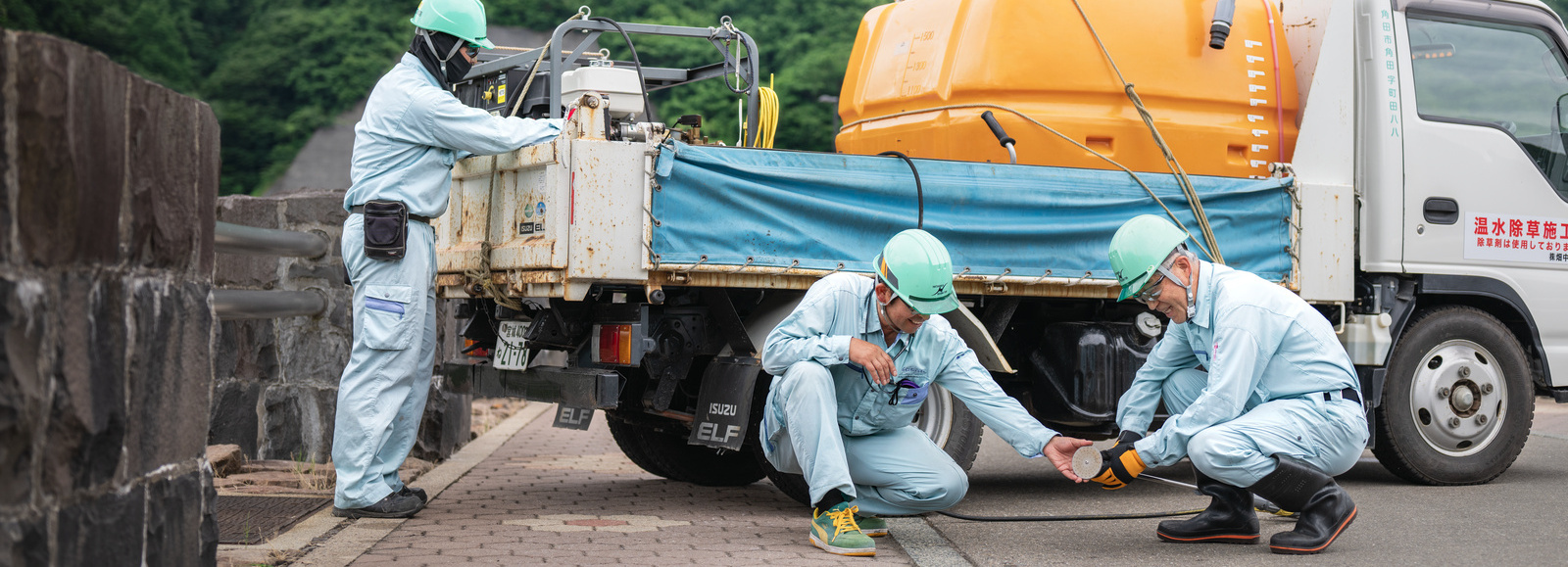
Until now, five to seven employees from Hatanaka Koumuten had been going out with line trimmers, removing weeds somewhat ineffectually. Now, just three colleagues carry out the work – ergonomically, safely and efficiently.

Challenge:

Between the interlocking paving stones of the Shichikashuku Dam, weeds easily take root. Until now, they were cut with line trimmers, a laborious and inefficient task, as the weeds grow back quickly.

Solution:

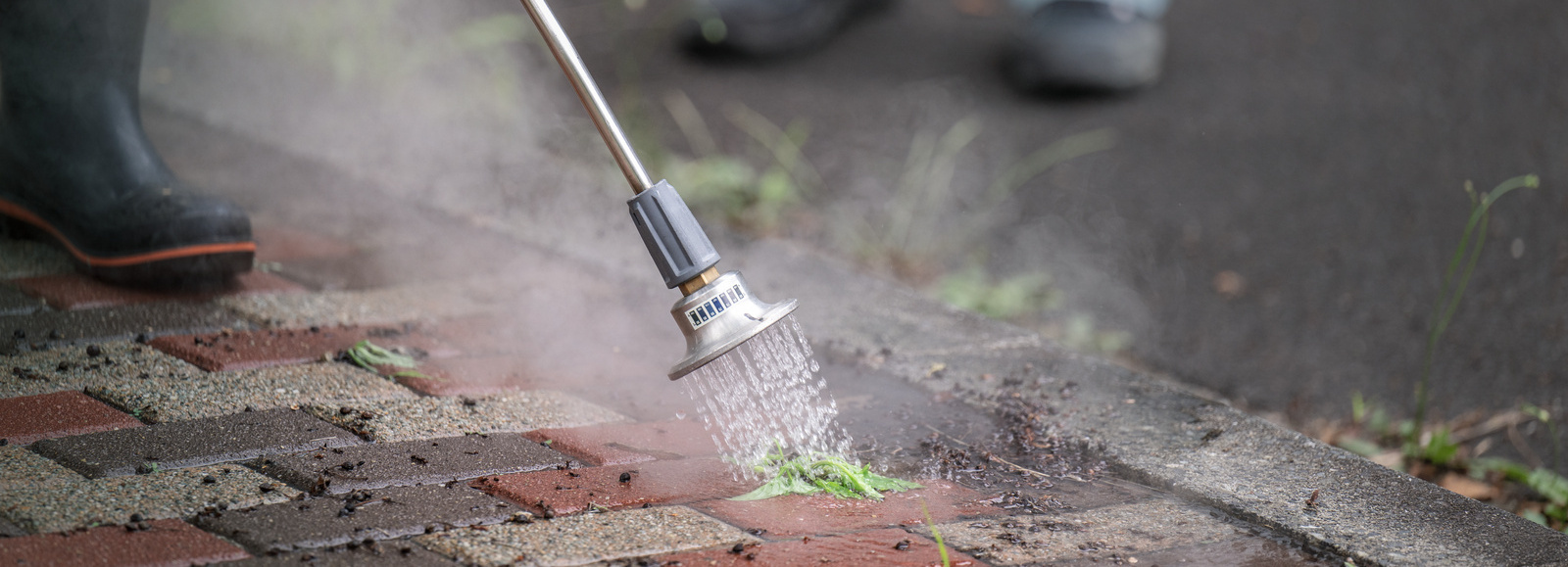
The HDS 1000 De Weed hot water high-pressure cleaner brings hot water to the roots of the plants. They die off, do not grow back – and users have less work to do.
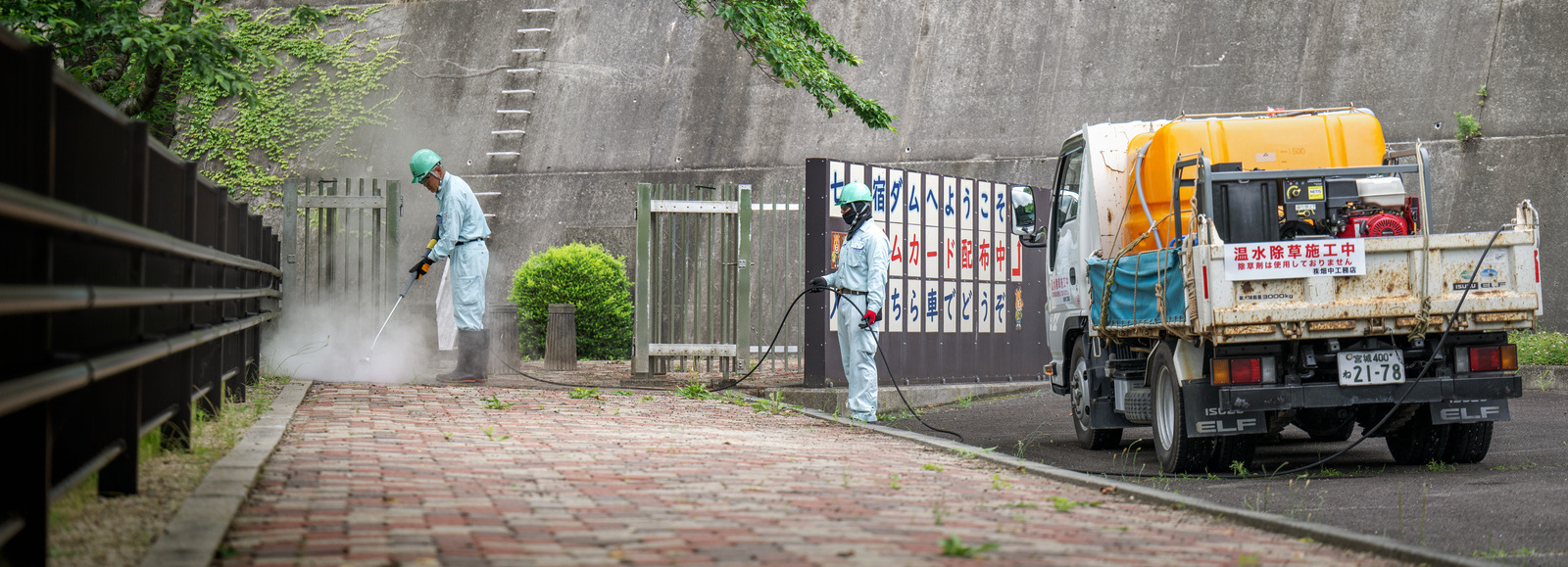
Supplying drinking water for towns and communities, providing water for agriculture, flood protection – the tasks of the Shichikashuku Dam in the north-east of the main island of Honshu in Japan are manifold. It is also in a scenic location, making it a destination for thousands of tourists.

Since 2006, Hatanaka Koumuten, a company specialising in maintenance and property management, among other things, has been responsible for maintaining the dam. Maintenance manager Kazunori Shionuma explains: “Interlocking paving stones have been laid over an area of 8,000 square metres, allowing the property to blend into the landscape. However, many seeds get caught in the crevices and weeds grow very well.” Weed removal is not only necessary for aesthetic reasons but also serves to protect the infrastructure.

Unkrautbeseitigung

Until now, employees used line trimmers to cut grass and weeds. Handling required dexterity, because if the trimmer were held too high, too many weeds would remain. However, if a user pressed the trimmer too hard against the ground, the equipment would be damaged. Shionuma states: “Finding qualified personnel for this wasn’t always easy.”

Compliance with occupational safety regulations required additional effort, as the rotating nylon cords could fling small stones at high speeds, creating a risk of accidents. A total of five to seven staff members were deployed on site. “The problem was that we would cut away the unsightly greenery, but the roots remained. So the grass and weeds grew back very quickly and our workload increased.”

Hatanaka Koumuten

Sometime in the spring of 2020, when Shionuma had already started searching for environmentally friendly weed removal alternatives, the phone rang. An employee of Kärcher Japan had decided to approach Hatanaka Koumuten as part of a cold call campaign and present the idea of weed removal using hot water. “When I heard that the hot water could penetrate to the roots and destroy them, I was immediately convinced.”

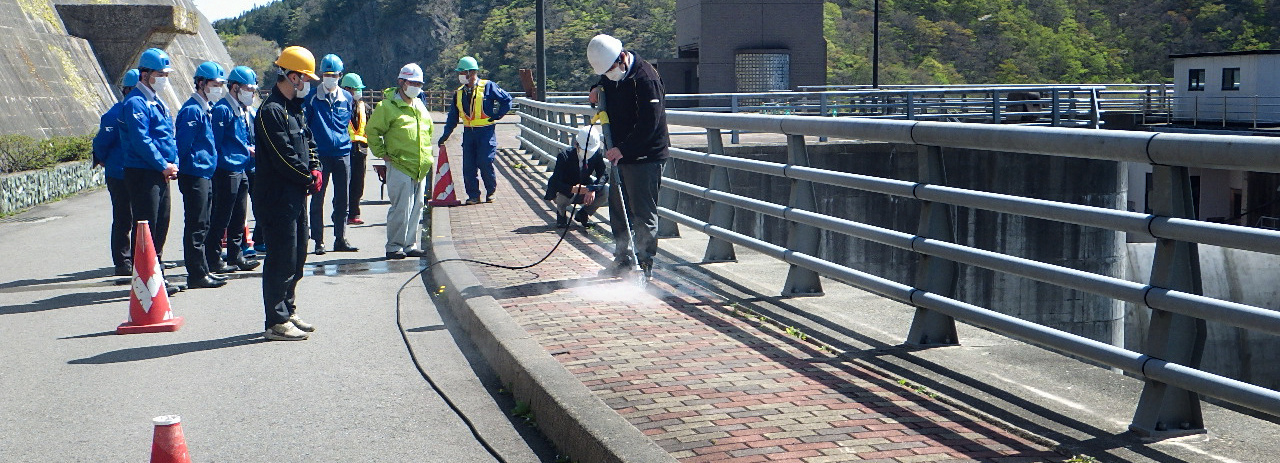
Best of all, the HDS 1000 De Weed hot water high-pressure cleaner constantly produces water at a temperature between 92 and 99 °C. The water is applied using weed removers such as the WR 50 and reaches the roots, causing them to die and the plant to wither.

On site, a team from Kärcher Japan demonstrated the capabilities of the method to employees of Hatanaka Koumuten and the Japanese Ministry of Land, Infrastructure, Transport and Tourism (MLIT) – and they were thoroughly impressed.

Hatanaka Koumuten

The technology has been in use since 2021 and was added to the New Technology Information System (NETIS) by MLIT in 2024. This database provides an overview of technologies that are suitable for use in public works. With support from Kärcher, the team at Hatanaka Koumuten optimised its processes to work more efficiently.

Today, just three employees are sent on each deployment. As the hot water jet emerges at low pressure, there is no risk and no effort required in terms of occupational safety. Dead grass and weeds are removed by wind and rain, so there is no need to collect and dispose of grass clippings. “Over time, we have reduced the workload and costs by 30 per cent compared to before,” Shionuma notes. Wind and weather continue to scatter grass and weed seeds around the dam, so two to three deployments are still necessary each year. “But the weeds grow more slowly because they have to re-establish themselves, so the duration of use decreases continuously. I’m confident that we will be able to further reduce workload and costs in the future.”

Hatanaka Koumuten
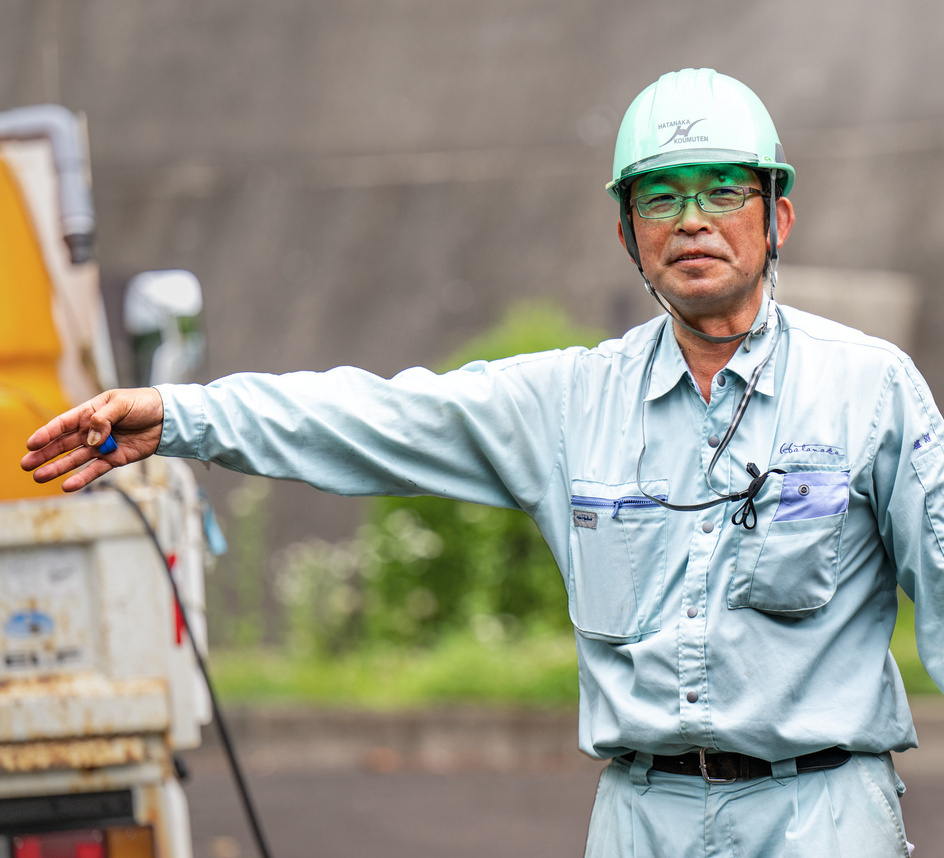
Kazunori Shionuma, Instandhaltungsleiter Hatanaka Koumuten
„I’m sure that we can further reduce costs.“
Kazunori Shionuma, Maintenance Manger at Hatanaka Koumuten

The project at a glance

Weed removal at the Shichikashuku Dam in Japan was exhausting, time-consuming and unsustainable for the Hatanaka Koumuten team. Until Kärcher came along.

Challenge

  • Interlocking paving stones have been laid over an area of 8,000 square metres at the dam.
  • Weeds and grass grow in the crevices between the paving stones, which five to seven employees from Hatanaka Koumuten were cutting back with line trimmers.

Solution

  • Kärcher Japan demonstrated to Hatanaka Koumuten how weeds can be removed sustainably down to the roots using hot water.
  • With the HDS 1000 De Weed, a smaller team can now work faster and more safely.
  • The weeds grow back more slowly, reducing the duration of use.

low cost

30% reduction in workload and costs for Hatanaka Koumuten.

Mitarbeiter

3 instead of up to seven employees achieve better results, as the weeds are destroyed right down to the roots

calender

2–3 deployments per year are enough, and they take less time than before because the weeds grow more slowly.

occupational safety

Greater occupational safety thanks to the switch from mechanical trimmers to hot water technology.