Effectively remove graffiti: methods for graffiti removal and prevention
There are many methods for graffiti removal. From hot water high-pressure cleaning to various blasting methods, the appropriate method is selected according to things such as the type of graffiti paint, the material of the substrate, and local and legal regulations. In addition, preventative options exist so that unwanted graffiti can be removed more conveniently and more gently next time.
There is hardly a topic where the line between art and vandalism is as narrow as with graffiti. Although the legal situation varies around the world, illegal murals cause millions of euros in damage every year in many countries. There are numerous methods for removing graffiti. The choice of the appropriate method depends on many factors. However, preventive measures can also be taken to protect the surfaces so that graffiti can be removed more easily and more gently the next time.
The most important parameters in removing graffiti
The type and exposure time of the graffiti paint play a decisive role in how the paint can be removed. The shorter amount of time the paint adheres to the substrate, the better it can be removed. The type, porosity and absorbency of the substrate are also very significant – because the deeper the paint penetrates, the harder it is to get it out again. In other words, the more closed the surface, the easier it is to remove the graffiti. Local and legal regulations also play a role. For example, if the graffiti is on the facade of a listed building certain chemical cleaning methods may not be used for removal depending on local policy.
Considerations for removing graffiti
-
Type of graffiti
-
Age of the graffiti
-
Type, porosity, and absorbency of the substrate
-
Local and legal regulations
Types and components of graffiti paints for removal
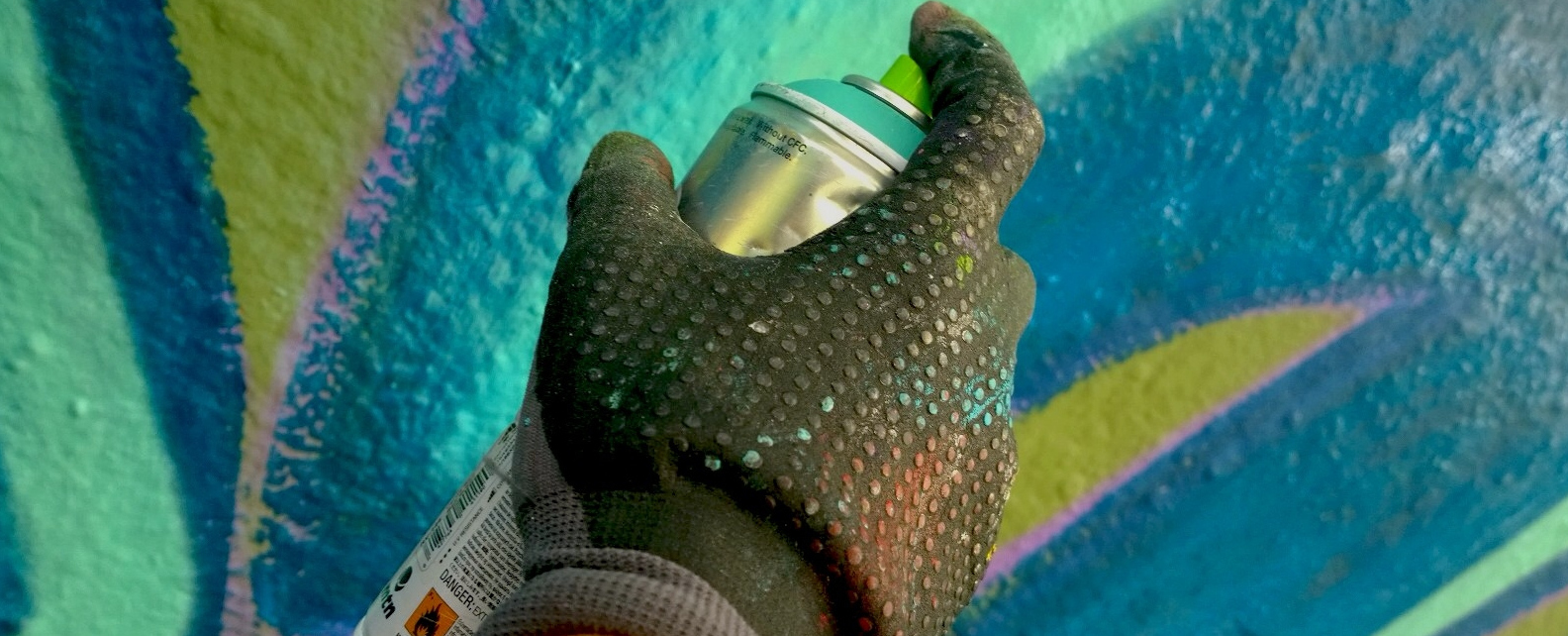
The composition of graffiti paints is as diverse as the other options available on the market. The components that make removal more difficult than anything else are oils, binders, propellants, solvents, and various pigments. The top 3 types of graffiti used are spray paint and varnishes, marker and felt pens, and bitumen spray. Spray paint and varnishes can be identified by the fact that they are usually applied broadly, with the edges being slightly thinner than the central area. Marker pens and felt-tip pens tend to be applied evenly. Because they are very thin, they penetrate deeply into the surface drawn on. Bitumen spray, also called undercoating, is very sticky and one of the most stubborn forms when it comes to removal.
Age of the graffiti
The best results of graffiti removal are achieved when the graffiti is removed promptly after application. In addition, prompt removal can prevent possible further graffiti.
Types of bases
Graffiti can be found on all kinds of materials. House walls, facades, and barrier walls on motorways, for example, are made of plaster, concrete, or tiles. Trains, suburban trains, and transport stops are also popular targets – both the glass and plastic windows and the benches made of wood or plastic. In addition, materials such as metal, paint or asphalt are also used as a base for graffiti, for example in traffic signs, cars or roads.
Local and legal regulations
Local regulations must be observed for graffiti removal. This primarily concerns the use of cleaning agents. Especially in listed building protection, this must be given extra attention. With listed buildings, it is often the case that only certain chemicals (or even none at all) may be used for graffiti removal.
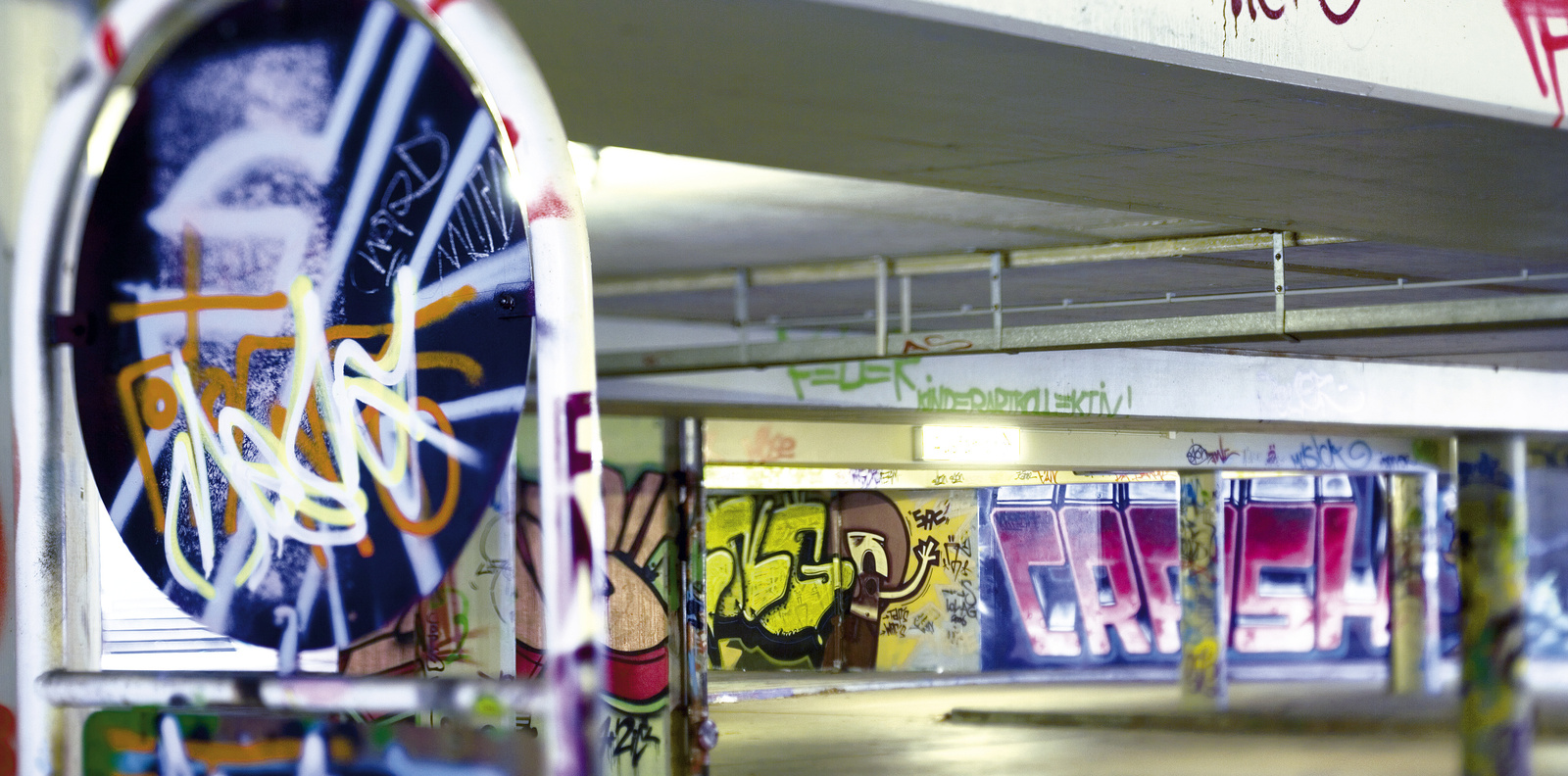

Monument cleaning and restoration
Cleaning and restoring monuments is a task that presents a unique set of challenges. One of the key considerations is the risk of damaging these precious and historic objects with incorrect procedures. In order to determine the appropriate cleaning techniques, a thorough analysis of the materials, type and level of dirt, as well as the shapes and structures involved is necessary. This often involves testing possible cleaning methods on sample surfaces to ensure their effectiveness and safety. Some of the available options for restoration cleaning include low-pressure particle blasting, hot-water high-pressure cleaning with a steam stage, dry ice blasting, compresses, or even laser technology.
How to remove graffiti
The right way to remove graffiti is based on the considerations mentioned above. In addition, the concentration and exposure time of the suitable (chemical) graffiti removers, if used, play an important role. The agents usually have a high solvent content and must be used individually in the correct concentration and sequence to achieve a successful result. These dissolve the binder in the graffiti paint so that it can then be washed off a facade. The use of inappropriate, conventional chemical cleaners can result in damage to the surfaces or even in the paint penetrating deeper into the substrate. This can also happen if not used correctly. Like all cleaning agents, graffiti removers have a target temperature range in which they work best. For many graffiti removal agents, this is between 10 and 15 °C.
Tip 1 – Always test first:
Before the actual removal of the graffiti begins, the chosen tool and the graffiti remover should be tested in a small section at a suitable location.
Tip 2 – Remove as much as possible mechanically:
If the material and the working environment permit, manual pre-cleaning is ideal. Likewise, for environmental reasons, it makes sense to remove as much paint as possible mechanically in order to have to use as few (chemical) graffiti removers as possible.
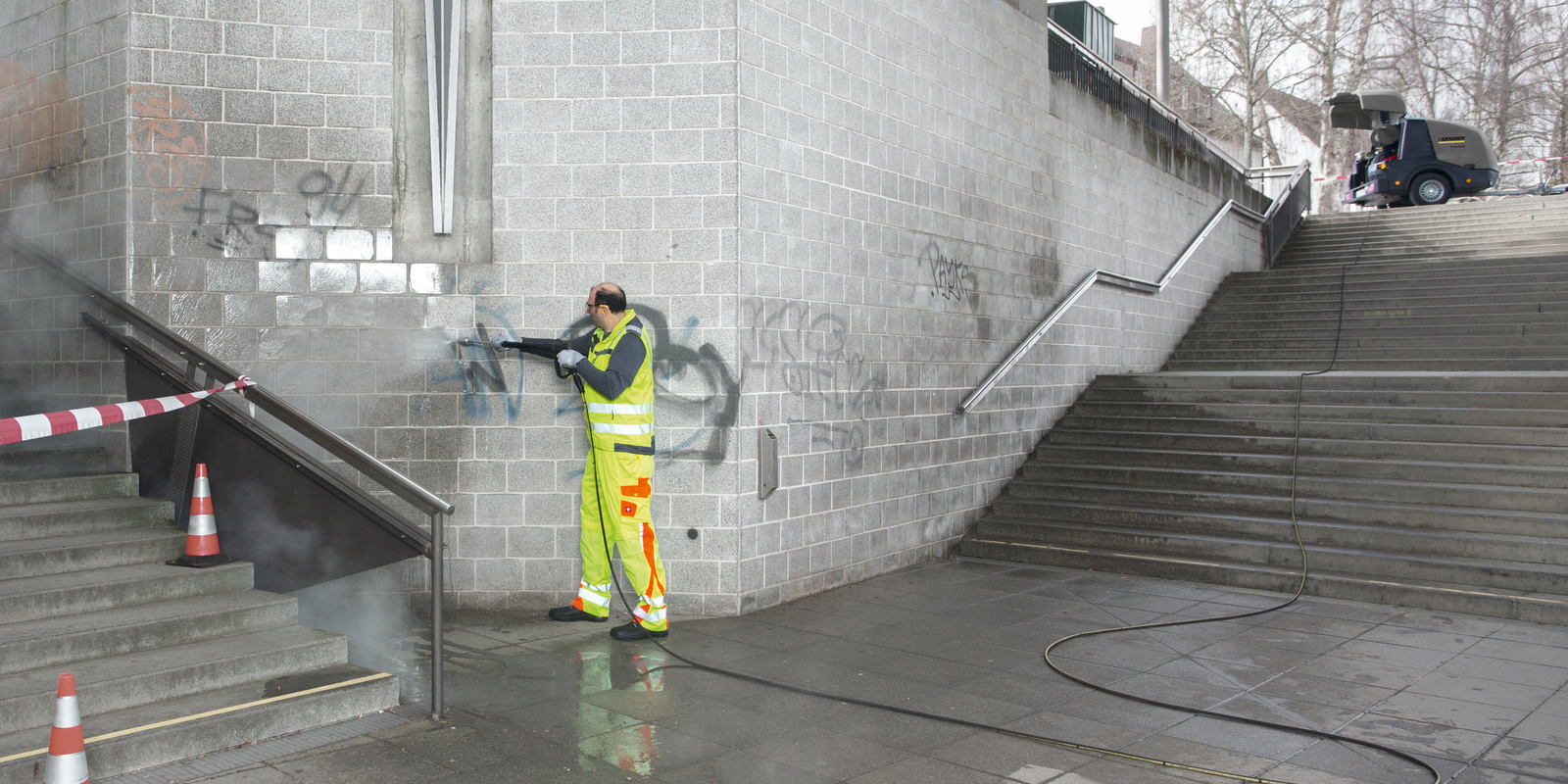
Hot water high-pressure cleaning
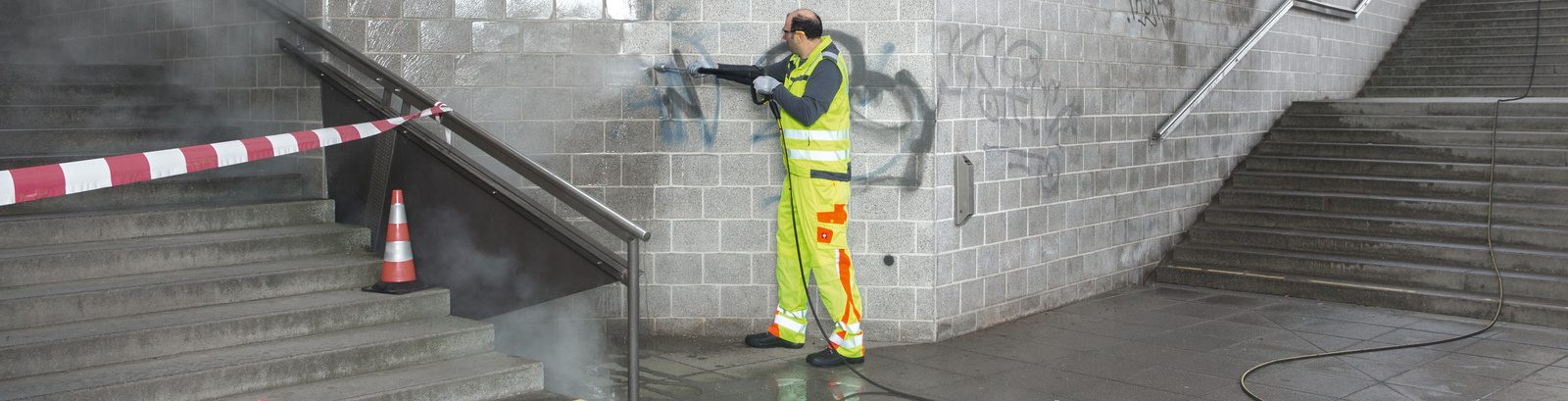
High-pressure cleaning is a established method for graffiti removal. For artificial stone or brick, hot water high pressure provides high cleaning performance. Operating temperatures typically range from 60 to 80 °C, which accelerates the softening of graffiti removers.
If graffiti needs to be removed in locations without power or water supply, a portable hot water high-pressure cleaner can be used. This unit operates independently via integrated water and fuel tanks and is constructed for mobile applications.
Abrasive particle blasting process
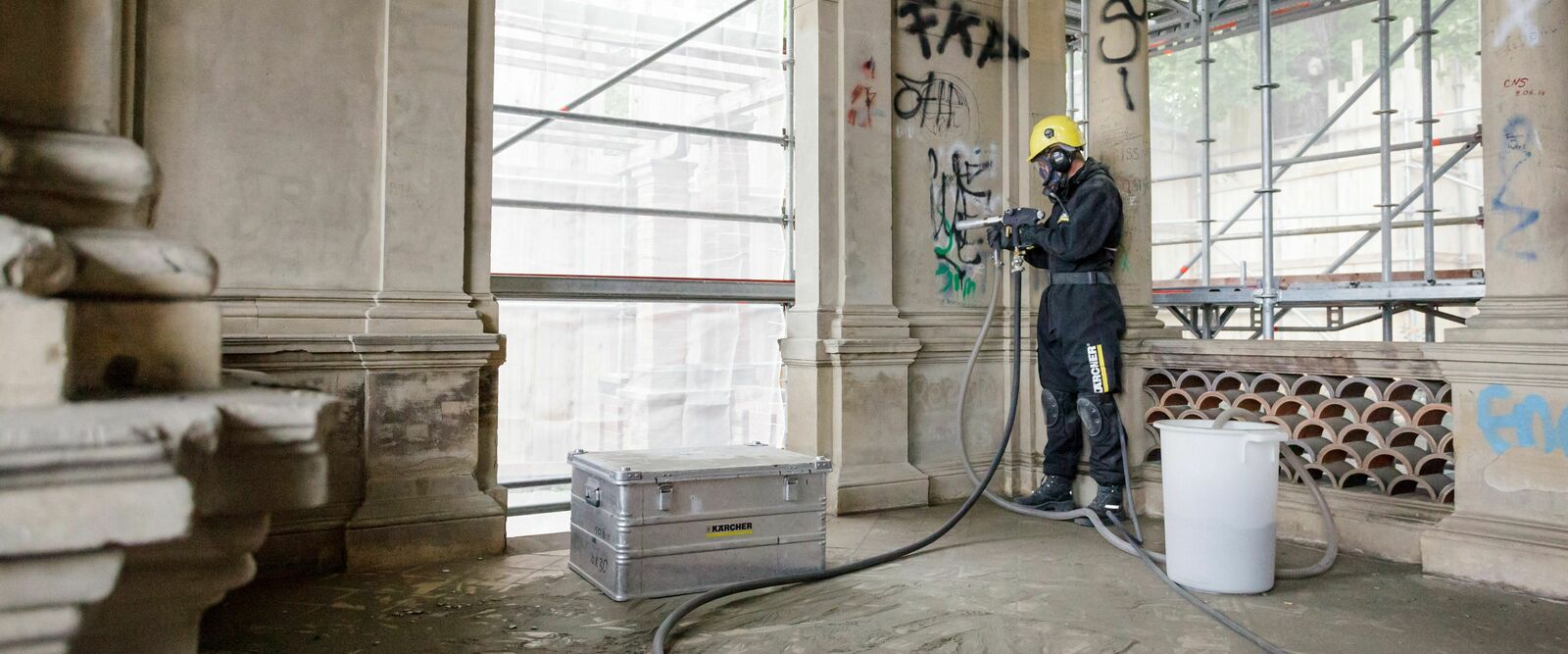
The particle blasting process enables controlled removal of stubborn stains and dirt. It is used to remove graffiti mechanically from surfaces such as natural stone and brick while preserving the underlying substrate. In this process, compressed air is generated by a compressor (minimum capacity of 4 m³ per minute), and a metered abrasive is added. Over 2,000 types of abrasives are available, varying in material, hardness, and grit size. The required hardness is determined in advance using tests according to Mohs' scale. Fine abrasives with a grain size of 0.2 to 0.8 mm are suitable for delicate surfaces. Coarse blasting media with a grain size of 0.25 to 1.4 mm and a Mohs hardness of 6 or 7 are selected when rapid surface removal is required prior to wall resurfacing.
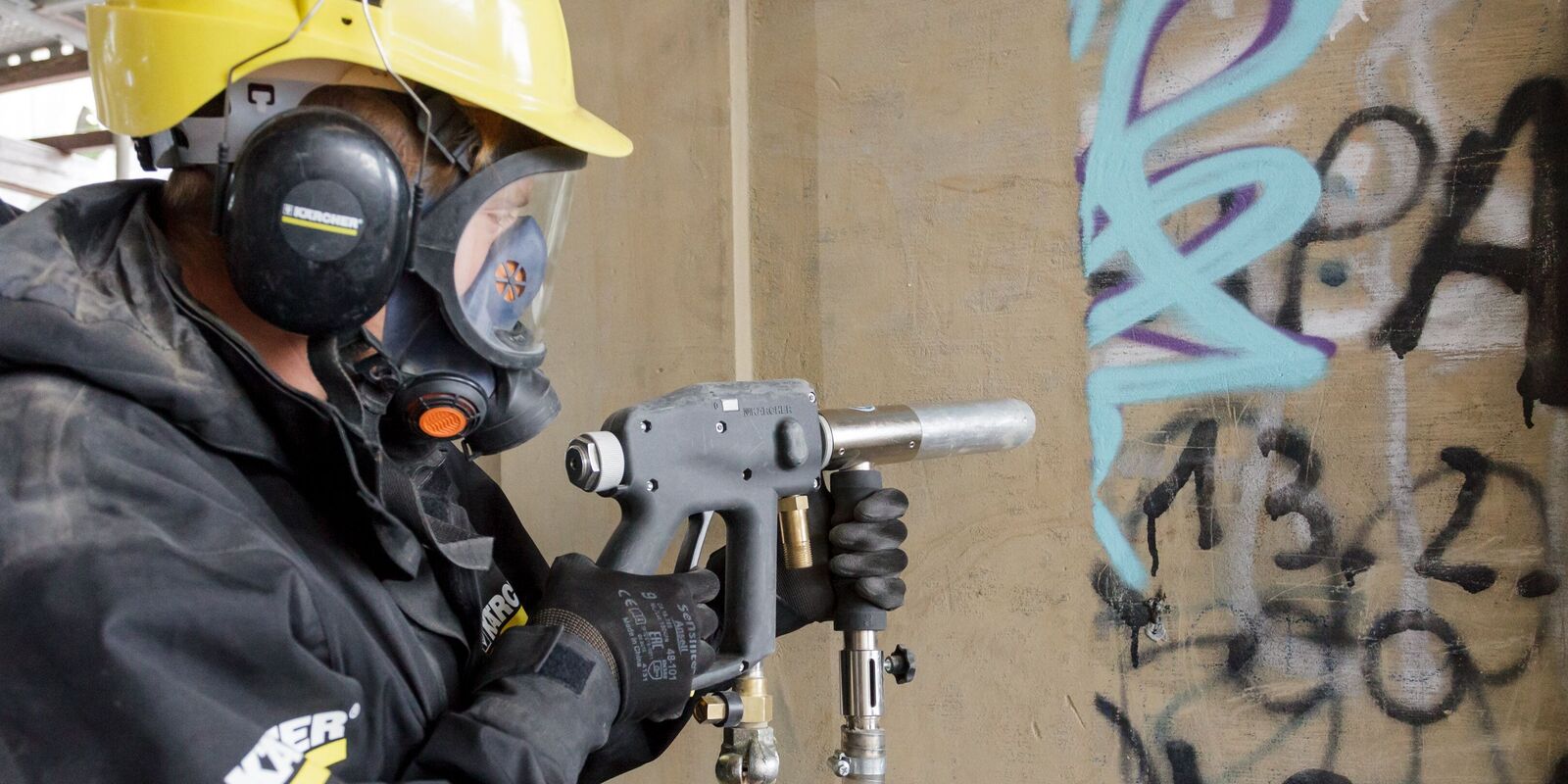
Abrasive particle blasting process
The gentle removal of stubborn stains and dirt – that's what the particle blasting process is perfect for. It is used to remove graffiti mechanically, yet gently, from surfaces such as natural stone and brick. In the process, compressed air is generated by a compressor (with a minimum capacity of 4 m3 per minute), and a precisely metered abrasive is added to this. More than 2,000 types of abrasive are available on the market and vary in material, degree of hardness, and size and shape of grit. The degree of the abrasive’s hardness must be defined in advance by the tests according to Mohs' scale. Often, a hard but very fine abrasive with a grain size of 0.2 to 0.8 mm is the best choice. Coarse blasting media with a grain size of 0.25 to 1.4 mm and Mohs hardness of 6 or 7, on the other hand, are suitable for fast, efficient removal of graffiti if the wall needs resurfacing anyway.
The right type and amount of abrasive and the level of air pressure can remove graffiti from different types of surfaces. However, there are also materials that don’t suit a particle blasting process. Metal, glass, or concrete, for example, will become cloudy or broken. Adding a small amount of water (up to 120 l/h) to the nozzle largely prevents dust formation.
This procedure can often remove a high proportion of the graffiti, especially the part that sits on the surface. If the surface is very absorbent, it may be necessary to use cleaning agents afterwards.
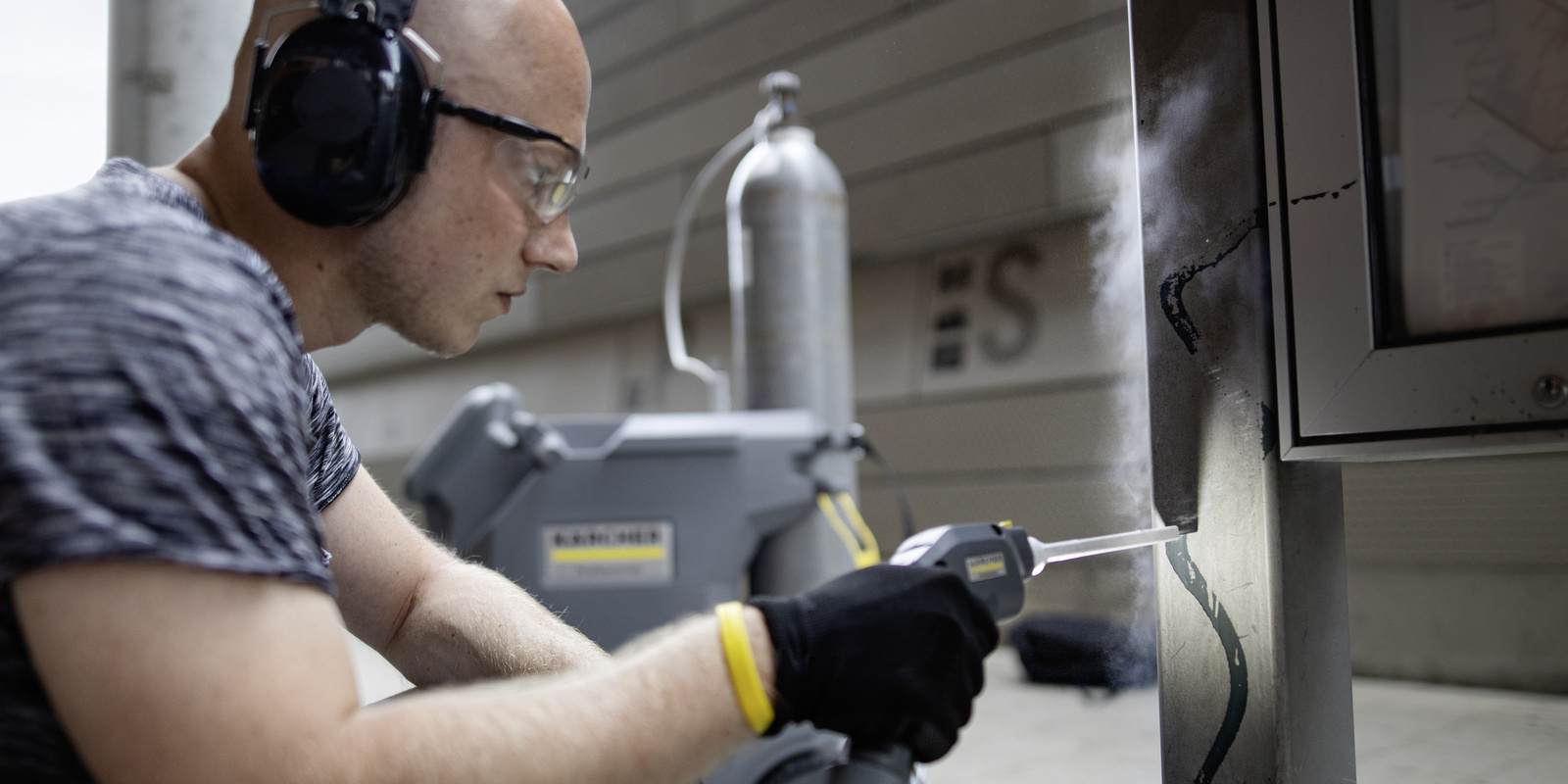
Dry ice blasting
Dry ice blasting removes graffiti from hard surfaces such as glass, metal, or tiles. The dry ice pellets sublime upon impact, removing paint layer by layer while keeping the underlying substrate intact.
The blasting medium consists of dry ice pellets – frozen CO2 granules at a temperature of -79 °C. Hitting the surface at speeds exceeding 150 m/s, the cold pellets cause the graffiti layer to embrittle and crack due to the temperature difference. Simultaneously, the pellets penetrate these cracks and immediately sublime into CO2 gas, mechanically detaching the paint particles.
Tip – Always use fresh dry ice:
After just 1 day, dry ice pellets decrease in their efficacy by up to 20 percent – therefore, it is recommended to always use fresh dry ice for graffiti removal.
Not recommended: DIY solutions or experimentation
If graffiti needs to be removed, professional help should always be called. There are companies that specialize in this field and know what tools and equipment to use. Attempts to remove graffiti using a DIY solution usually go wrong, and the paint smears or is only pushed into the substrate further. Also, graffiti should not simply be painted over without first removing it. This can lead to a so-called “bleeding through” of the painted graffiti, so that at least shades show through after a short time.
Graffiti removal and environmental protection
Complete graffiti removal may require detergent application depending on the substrate. High-pressure cleaning uses less water compared to low-pressure washing with a conventional water hose. Detergents should be dosed according to the manufacturer’s instructions. Particle and dry ice blasting operate mechanically without added detergents, generating solid residue primarily from the blasting media and loosened paint. As the removed paint represents the primary environmental factor during cleaning, collected particles and wastewater must be disposed of or processed according to local regulations.
Prevention using the right graffiti protection
There is no protection against graffiti, but preventive measures can be taken to make the paint easier to remove later and to protect surfaces against significant damage. However, even with the appropriate protection it is still true that the faster the graffiti is removed after it has been sprayed on, the easier it is to remove the paint.
Numerous options for graffiti protection are available on the market. Essentially, a distinction can be made between sacrificial and permanent systems for graffiti protection.
Sacrificial systems – also known as semi-permanent protection – must be reapplied after graffiti has been removed. The top layer (protective layer) is therefore “sacrificed”. With semi-permanent protection, a second layer remains on the surface.
Temporary protective coatings, on the other hand, are completely removed because they consist of only one layer – usually natural waxes, acrylates, or polysaccharides. They are usually solvent-free. If paint is applied, the graffiti on these substrates can be removed by hot water high-pressure cleaning.
Permanent systems form solvent-insensitive films on the treated surfaces and last up to 10 years. Graffiti is simply removed with the aid of appropriate cleaning agents and an absorbent cloth. A pleasant bonus is that the coating not only facilitates the removal of graffiti, it also protects the surfaces against many other types environmental influences as well as UV light.
Suitable products for your area of application
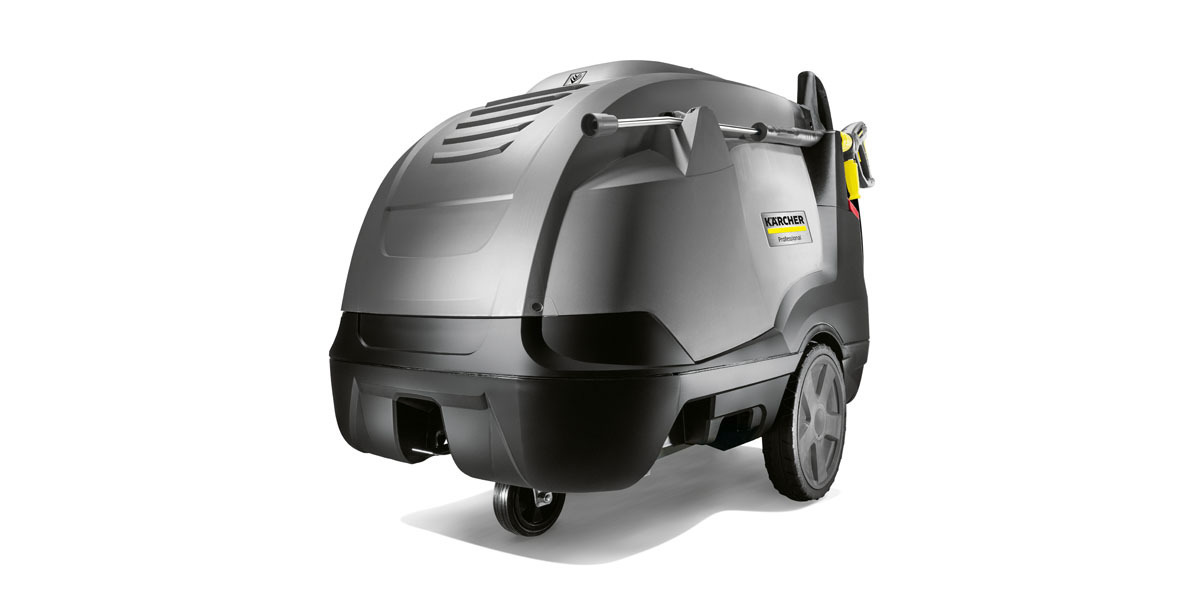
Hot water high-pressure cleaners
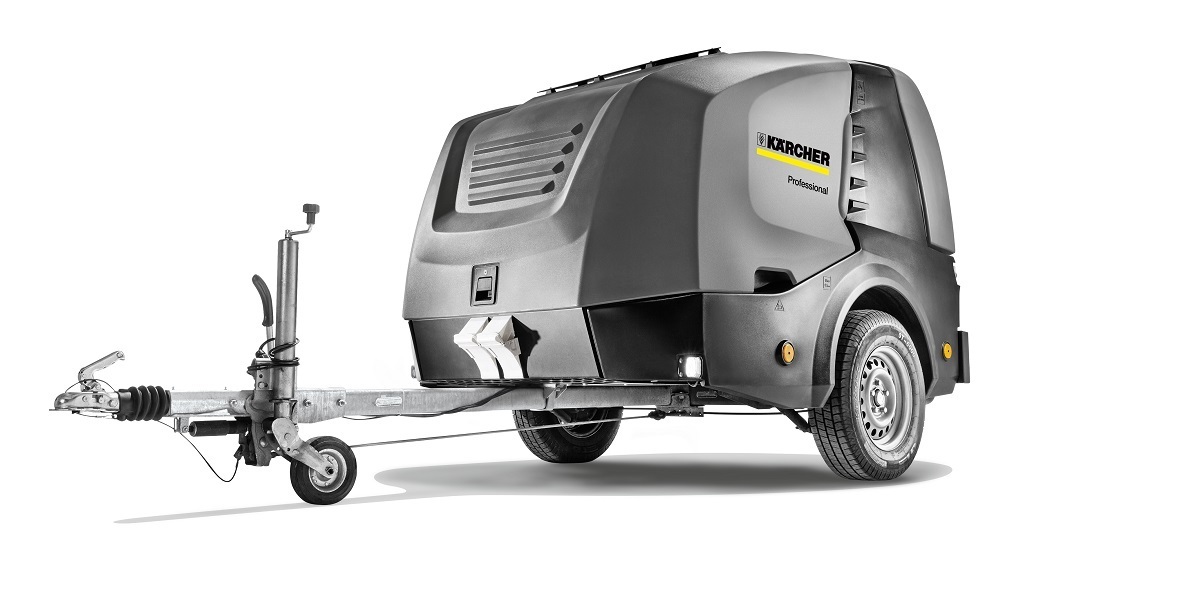
HDS Trailer
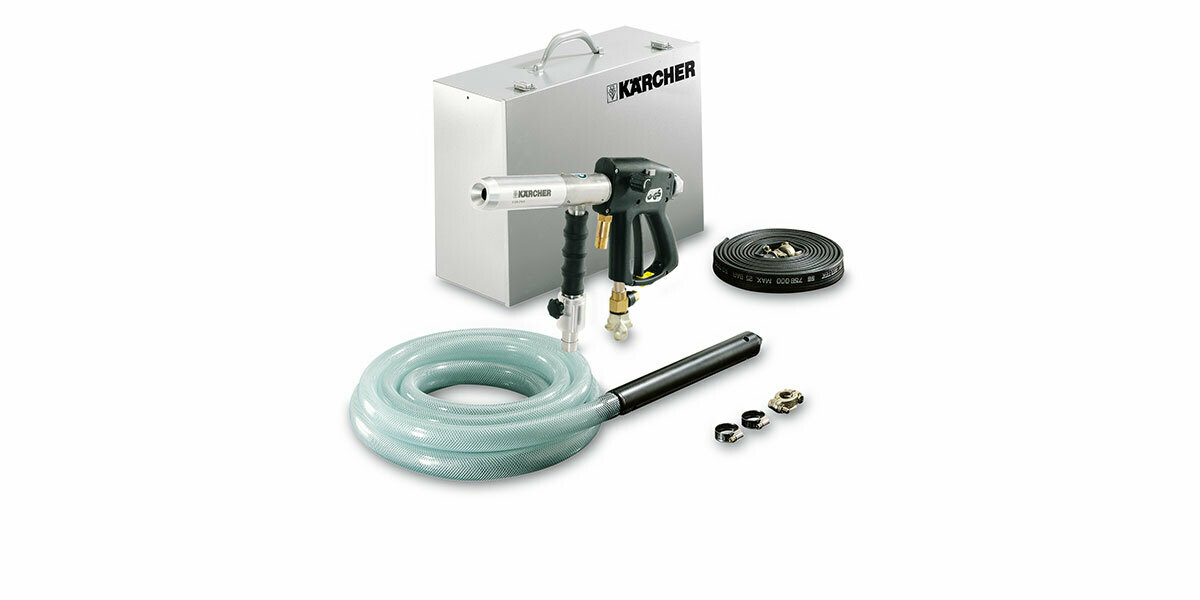
Jet gun
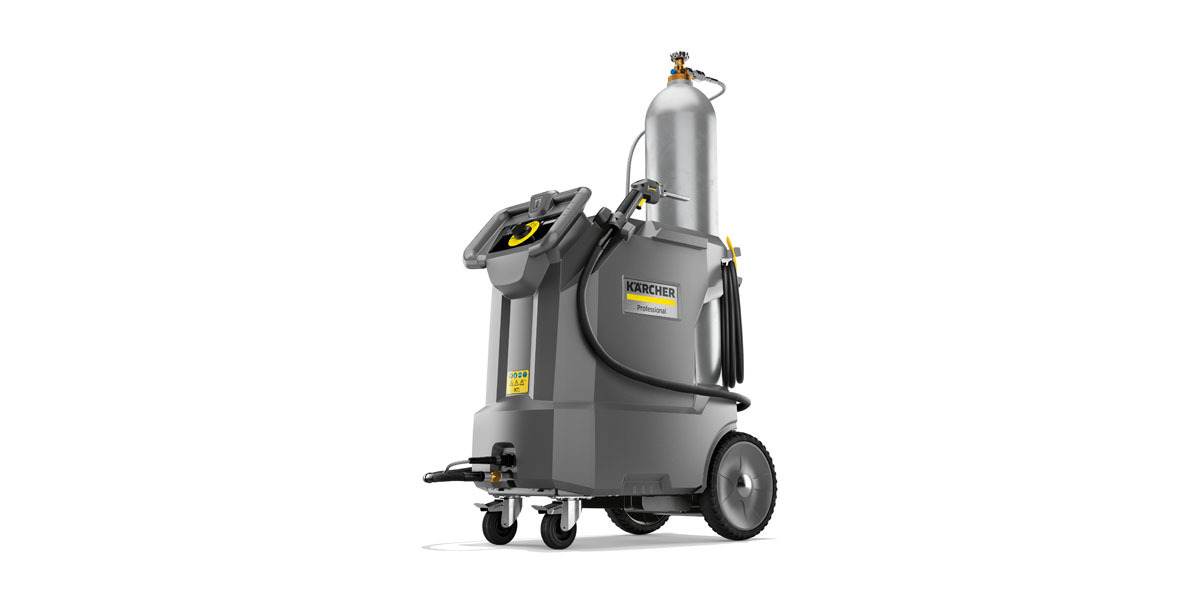
Dry ice cleaning